Curious about identity matching
You want to know whether two images show the same person, rather than whether someone looks attractive.
Start by separating identity questions from judgments about appearance.
Appearance and AI
If you are looking for a face attractiveness analyzer free to try, check what it actually does before uploading a portrait. An appearance score is an algorithm’s response to an image, not an objective measure of a person. Face Ai can help you think through the difference between evaluating a photo and exploring a creative portrait.
The most useful question is often whether you want a numerical opinion, a comparison of two photos, or a new visual treatment. Those are different tasks.
A typical analyzer responds to visible image features. Understanding those inputs makes its result easier to interpret and harder to mistake for a personal judgment.
The system first needs a face it can locate. A tilted head, cropped chin, heavy filter, or face partly hidden by hair may change what it detects or prevent a useful result.
Models may respond to features such as proportions, expression, lighting, and image quality. A flattering camera angle can affect these signals even though the person has not changed.
A number reflects the particular system’s training and scoring rules. Two analyzers can disagree on the same portrait; neither result establishes someone’s worth or universal attractiveness.
Start with the intended outcome, then decide whether a scoring tool or a creative workflow fits. Do not treat a portrait prompt as a request for a rating.
| Appearance analyzer | Creative portrait workflow | |
|---|---|---|
| Starting point | An existing image of a face | A description of the portrait or video you want to explore |
| Main question | How does this model rate this particular image? | How might this visual idea look in a creative treatment? |
| Expected result | A model-dependent score or assessment | A visual concept rather than an appearance judgment |
| Before you begin | Check upload terms, retention policies, and whether the stated access conditions meet your needs. | Describe the scene, lighting, and expression; check the destination’s terms before proceeding. |
| What to avoid | Reading a number as a fact about your identity or value | Assuming a creative treatment represents an unedited photograph |
| Best next check | Try to understand what the score measures and whether it changes across photos. | Review whether the result communicates the intended mood and respects the subject’s consent. |
Two portrait styles can create different impressions without revealing anything reliable about a person’s attractiveness.
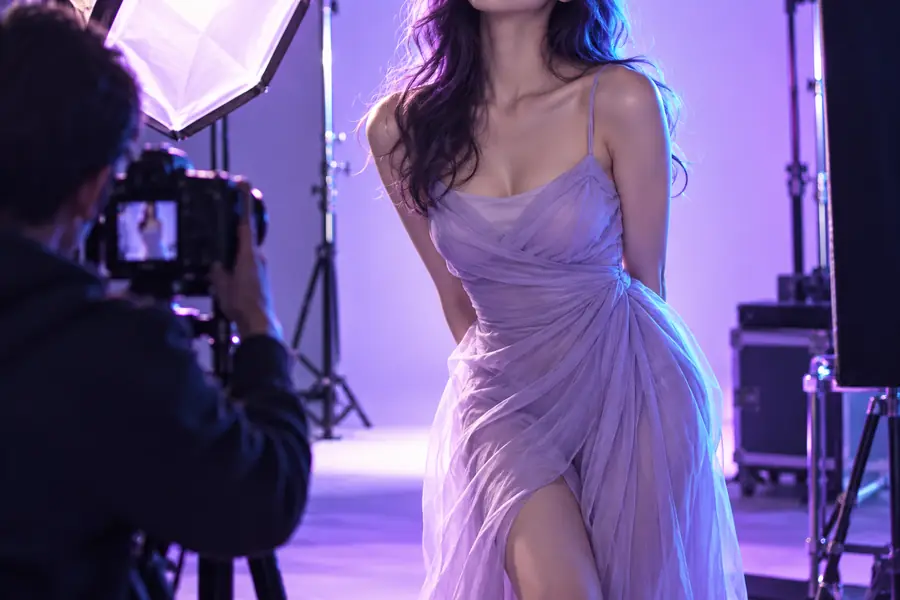
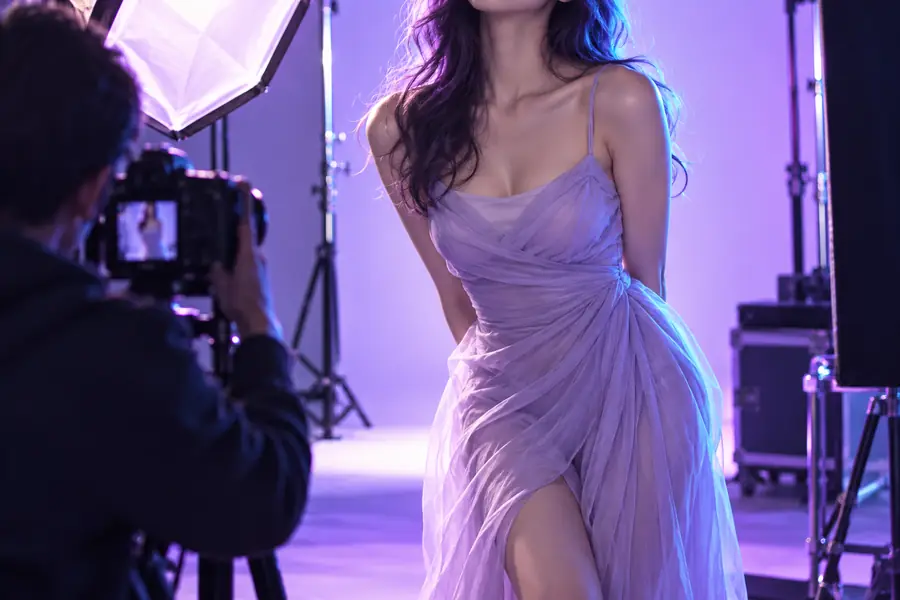
These are illustrative images, not a before-and-after result or the same person. Styling differences cannot validate an attractiveness score.
Photo-studio styleStylized portraitUse the purpose of your search to narrow the task. Keep another person’s photos out of any tool unless you have permission to use them.
You want to know whether two images show the same person, rather than whether someone looks attractive.
Start by separating identity questions from judgments about appearance.
Different lighting or angles make two photos hard to assess side by side.
Consider what image comparison can establish before drawing a conclusion.
You have seen a beauty score and want to know what, if anything, its number means.
Look at the scoring task and its limitations rather than treating the result as a verdict.
If your goal is to experiment with how a portrait feels, describe the lighting, setting, and expression you have in mind. Continue to the creative video destination to explore that idea. It is not an attractiveness analyzer; review its current features, access conditions, and terms there.
Access conditions depend on the specific service and can change. Check its current terms before uploading an image; a search result describing a tool as free does not establish what features or outputs are available without payment.
There is no single objective attractiveness value for a face. A score is specific to a model and an image, and lighting, expression, camera angle, and editing may influence it.
A model analyzes the pixels it receives, not a stable measure of the person. Changes in framing, illumination, pose, or image quality can alter its output even when the subject is the same.
Get the person’s permission first and read the service’s image-handling and retention terms. Avoid uploading sensitive or private portraits when you cannot verify how they will be used.
No. A creative portrait or video treatment explores a visual style; it does not provide a meaningful measure of personal attractiveness. Keep styling decisions separate from claims about the person pictured.